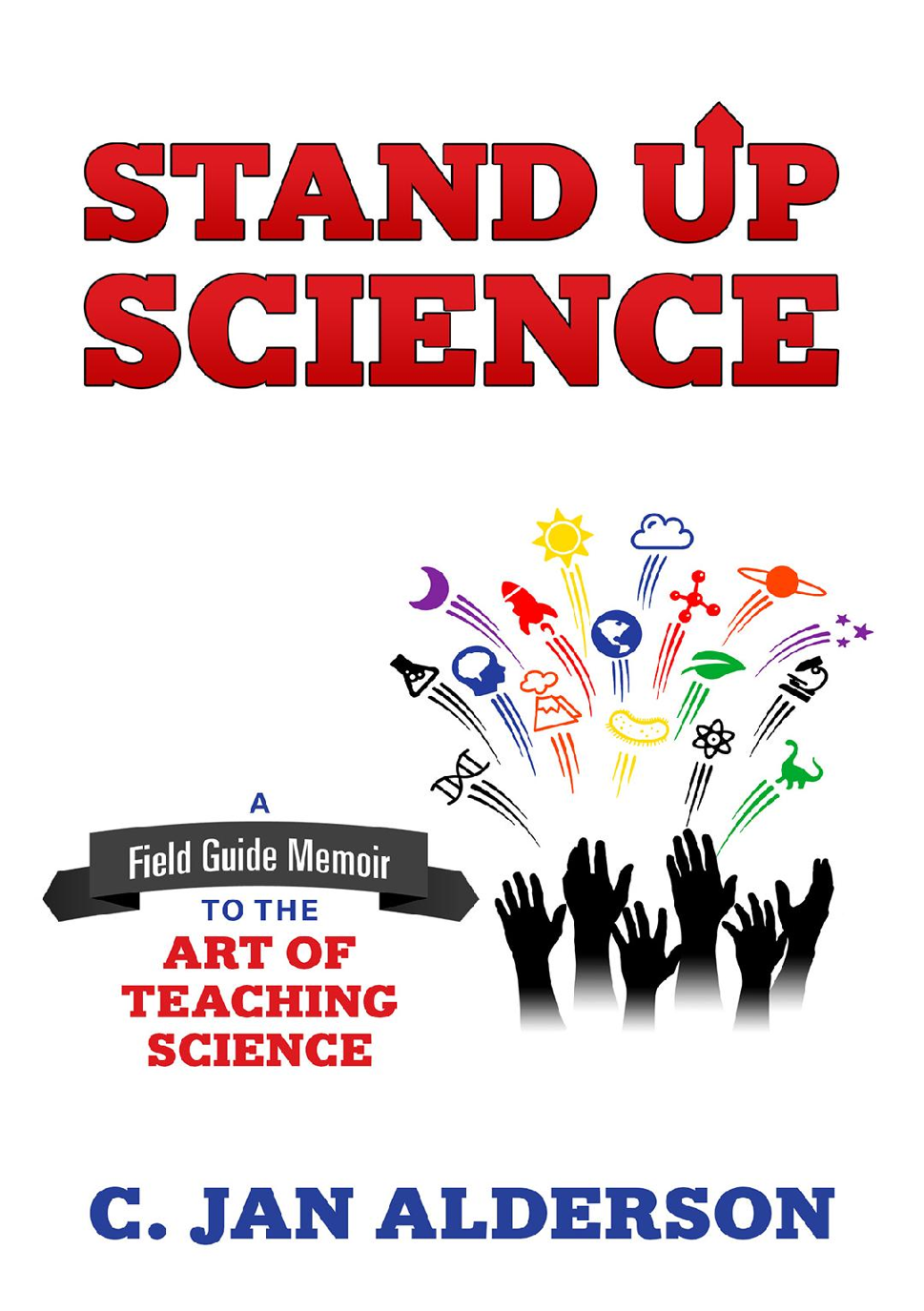

Cover of Stand Up Science: A Field Guide Memoir To The Art Of Teaching Science by C. Jan Alderson

Book Basics

  • Reader: Science Teaching at all levels
    • Science teaching for all science subjects
  • 62 short chapters with photos and quotes
  • 411 pages
  • Humor, memoir, teacher supportive content
  • Paperback – 6” x 9”
  • Published in 2026
  • Cost: $14.99
  • Order on Amazon
“Focus on curiosity, perseverance, and the fearless pursuit of scientific understanding” Marie Curie
Albert Einstein sticking his tongue out

When you open the ACTIVE LEARNING heading, we know you'll be amazed!

Albert Einstein
Physicists like to have fun too!!

Stand Up Science: Preface
A Field Guide Memoir To
The Art Of Teaching Science

FOR THE FIRST TIME, this book combines a field guide with a memoir. Writing for science educators, parents, and the general public is unique. Through short chapters, anecdotes, funny stories, guidance, and lesson ideas, the reader is left with relevance and an expanded perspective when teaching science. This is not technical writing. It is written more in a conversational “style” for easy reading, yet informative.

What does a novice teacher face? How can a veteran teacher renew their view of teaching science? What are a myriad of opportunities for students and teachers perhaps overlooked?

The total combination is comprehensive, useful, and captures the readers interest.

Stand Up Science offers an exceptionally wide range of science teaching topics. Most often, students would stand up, out from their desks, and understand that science is a process through active learning experiences. Science becomes a verb instead of a noun. Students retain interest and better outcomes when taught creatively. The intent is also to help teachers stand up before their classroom with more confidence and enjoyment.

1

Students would stand up for science beyond the classroom. Students, under our guidance, gathered voter signatures to place the 1/8th of 1% on the Missouri ballot. It passed providing money to build nature centers, education, land acquisition for wildlife, and wildlife management in Missouri. Students convinced the Kansas legislature to approve Little Blue Stem as the state grass, investigated water quality of Indian Creek, conducted science research projects, and picked up trash on Earth Day. Field trips that ranged from the school yard to global excursions and having brought science professionals into the classroom were highly effective.

Humor is a mind-catching technique. Stand-up levity (no stand-up comedian needs to worry) through puns, amusing stories, funny lab titles, cartoons, entertaining videos, and by cajoling students, are especially effective. Stand up humor easily merges with science learning.

After reading Stand Up Science, science educators will be better prepared to deal with emerging variables and finding new ways to teach science.

Science is the engine that drives change. To integrate a science lesson with the real world better prepares our next generation for the 21st century.

Teaching science successfully is an art as much as it is a science. To maintain long-term energy, professional excitement and pedagogical skills go well beyond the initial teacher training. The possibilities when teaching science are endless. The purpose of Stand Up Science is to ignite interest when teaching science.

For parents and other non-science educators, the intent of Stand Up Science is to provide an understanding of the enormous number of things science educators face and to understand the instructional possibilities when teaching science.

2